
Dun Laoghaire proved to be a good stopping off point, if a little expensive!
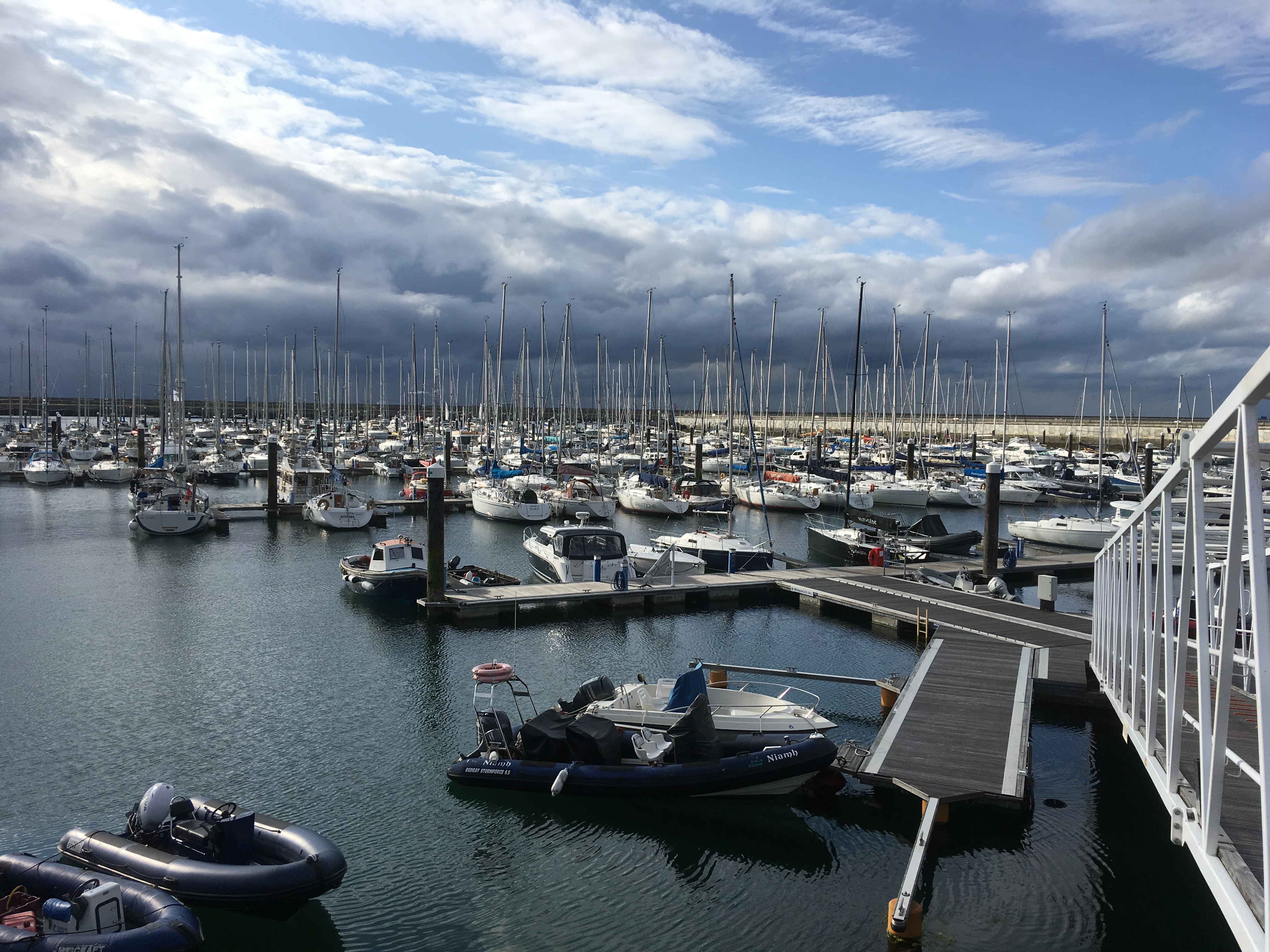
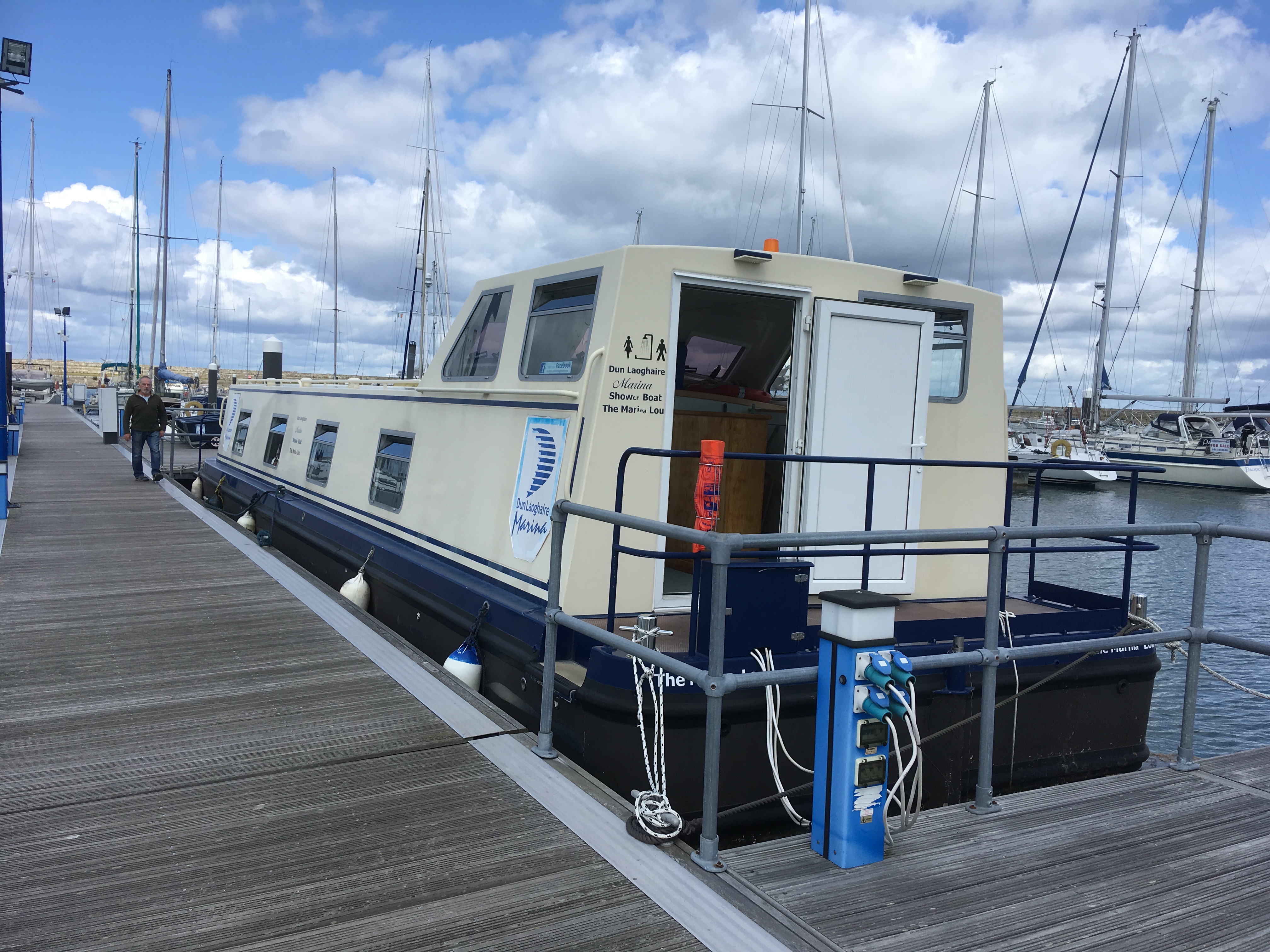
The marina is huge, something like 800 boats, with plenty of space and good facilities, including an amenities barge, moored towards the outer end of the marina, which had 5 rooms, each with a shower, wash basin and toilet.
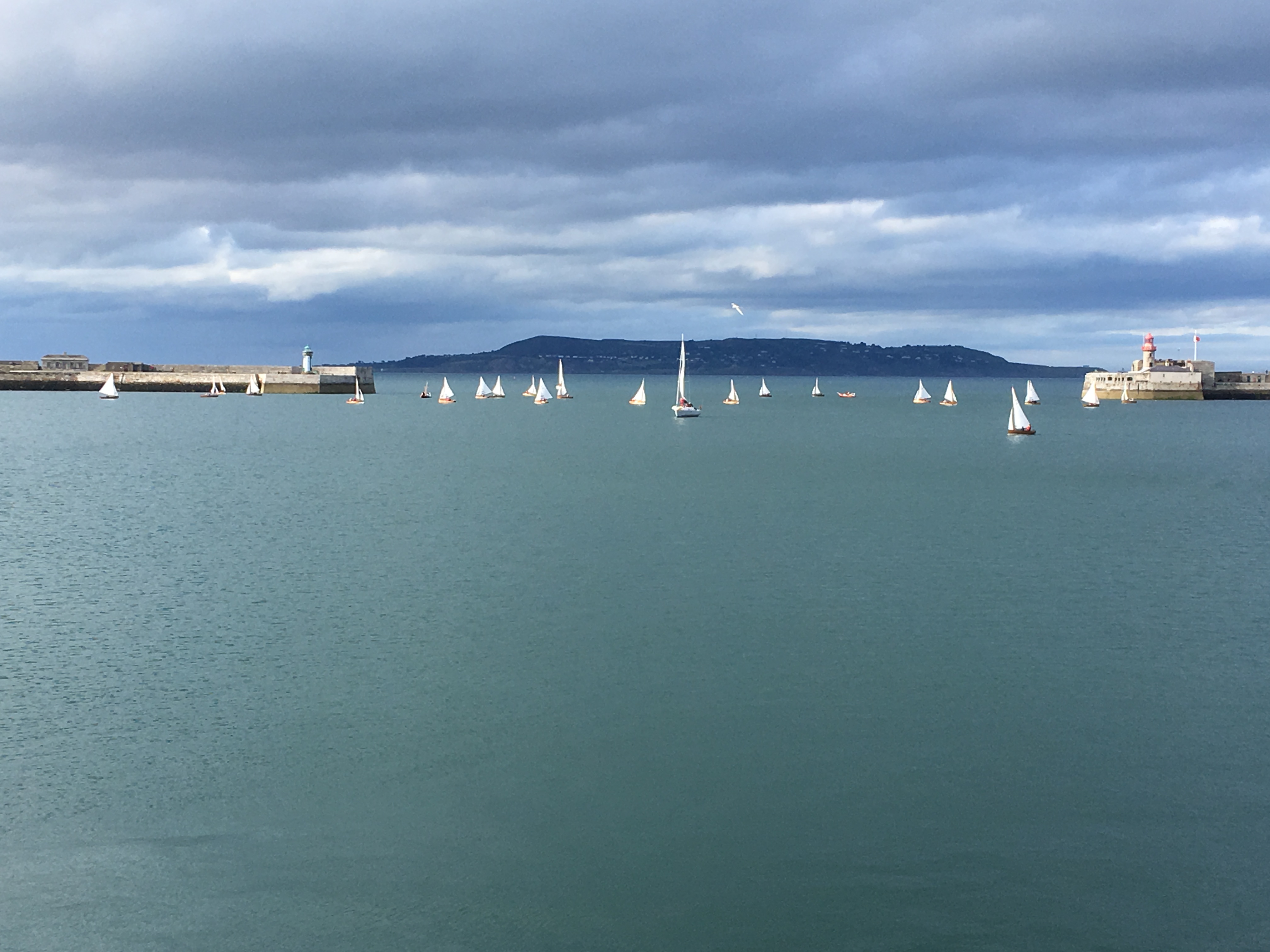
It’s a long way to walk to the shoreside facilities. Ferries no longer run into the port so there is plenty of space in the outer harbour for cruisers to get sails up, or down, and for sail training, of which there was plenty going on.
The town is close by with a regular train service into Dublin. We wished we had time to see a bit more and thought we ought to come back by air and spend a long weekend in Dublin.
The stop off proved to be the right thing to do as the next morning the wind had gone round to the west and the sea was much flatter. We left at midday at the start of the south going tide in 15 knots of breeze, the engine went off just outside the harbour and stayed off for the next 2.5 hours. We dropped a reef in the main at one stage in anticipation of stronger wind under an evil looking black cloud but the wind failed to materialise and we shook the reef out again.
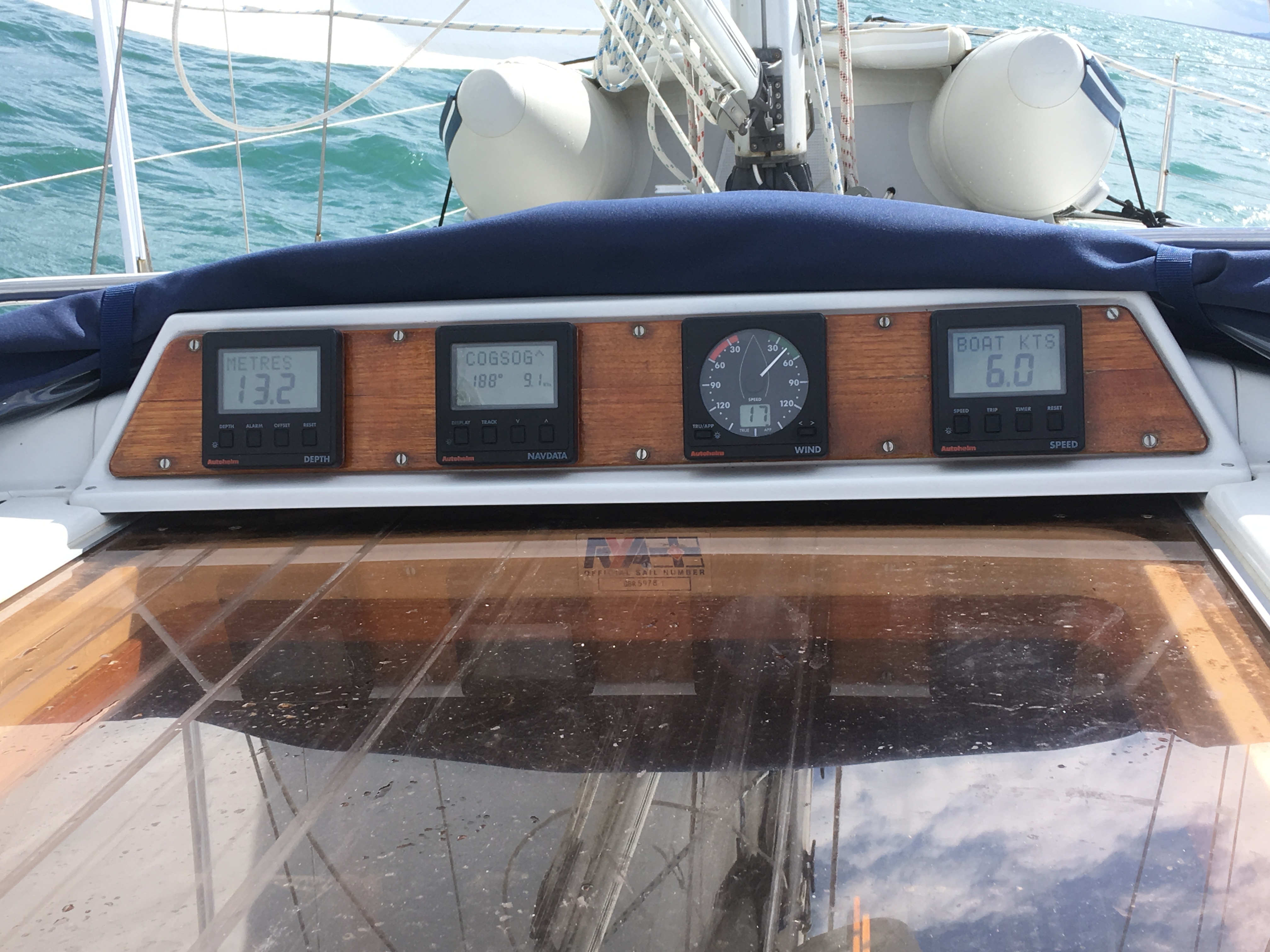
All the time we had strong tide with us with speed over the ground between 7 and 8 knots. Before Wicklow Head the wind died for a while and the engine went on for half an hour but then came back with a vengeance, gusting up to 26knots, needing 2 reefs in the main. By 16.46 the wind eased needing first the reefs out of the main then finally the genoa furled and the engine on for the last hour into Arklow. By 1800 we were moored alongside a long pontoon on the north side of the river, part of Arklow Marina with shoreside access and power on the pontoon.
It’s a bit of a walk around the small marina basin to the toilets and showers but at considerably less cost than Howth or Dun Laoghaire, and the second night was at a reduced rate!
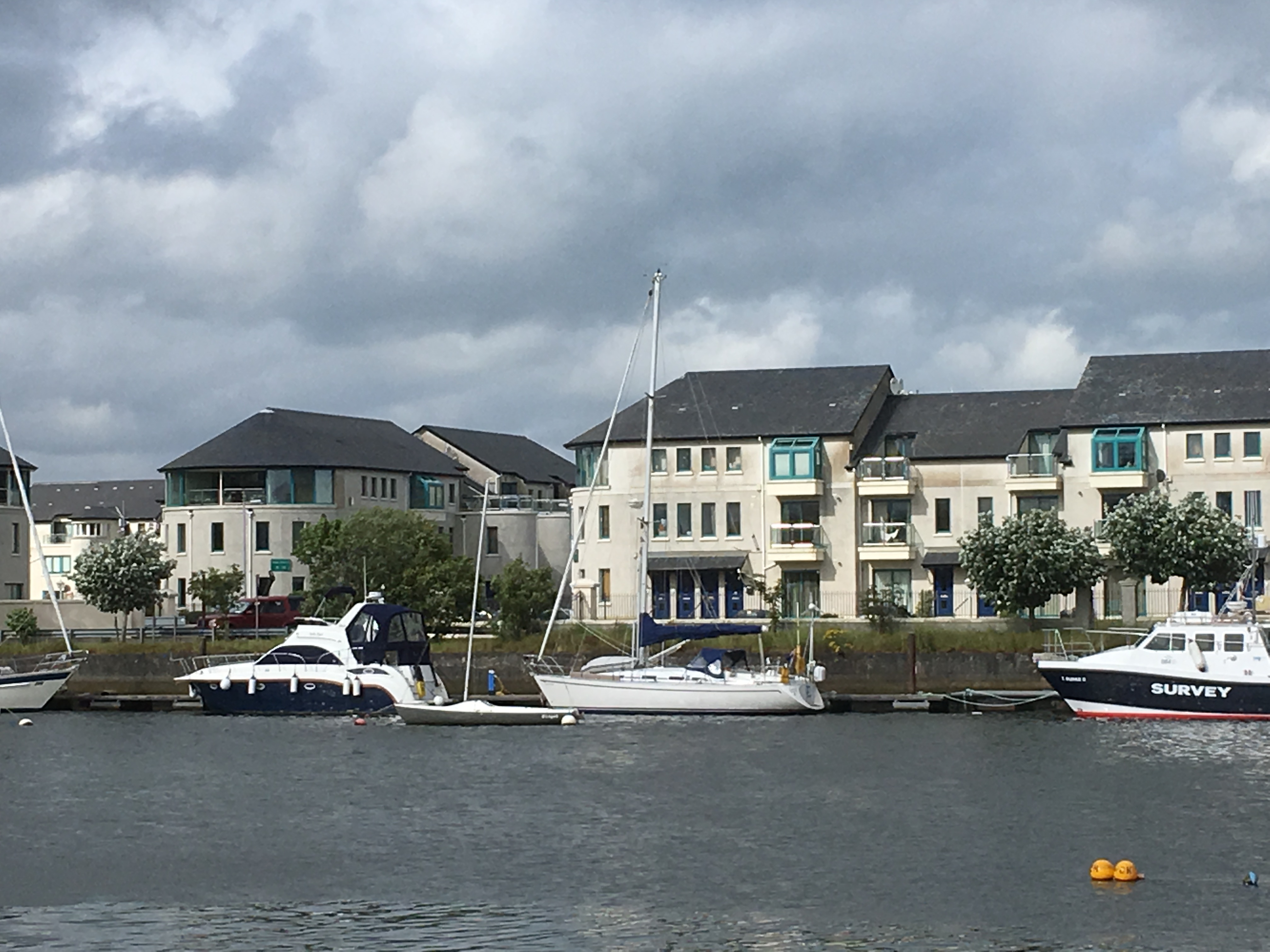
We hadn’t intended there to be a second night. We did a little shopping in Aldi, just down the road, then walked across the river bridge to the main town to find somewhere to eat for our last night in Ireland. Our intention was to leave on the south going tide on Friday afternoon and sail overnight to Milford Haven. We awoke on Friday morning, checked the weather forecast and went back to bed! The Irish Sea shipping forecast was giving SW force 8! Not what we wanted at all. Plans were revised to leave at 1300 on Saturday on a westerly weather window and head straight down to Lands End, a 164 mile sail, hopefully getting there before the wind goes round to the south again.
Saturday dawned with the wind as forecast so we left on time to make use of the south going tide and to make the most of the westerly wind.
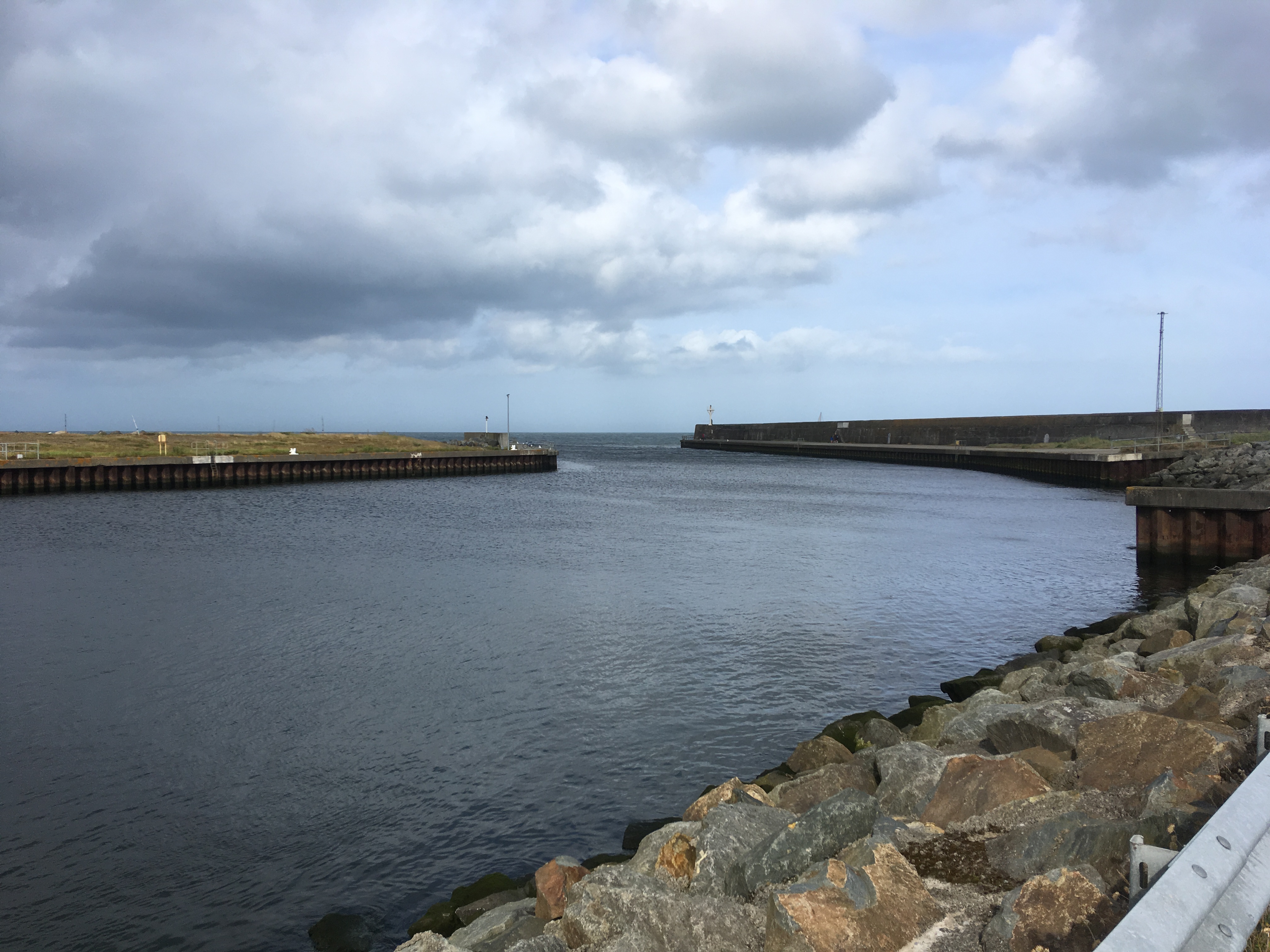
The only concerns were that the wind could potentially back to the south west and increase to force 6, neither of which would be very comfortable. The wind stayed in the west until late afternoon, dropping occasionally enough to need the engine on.
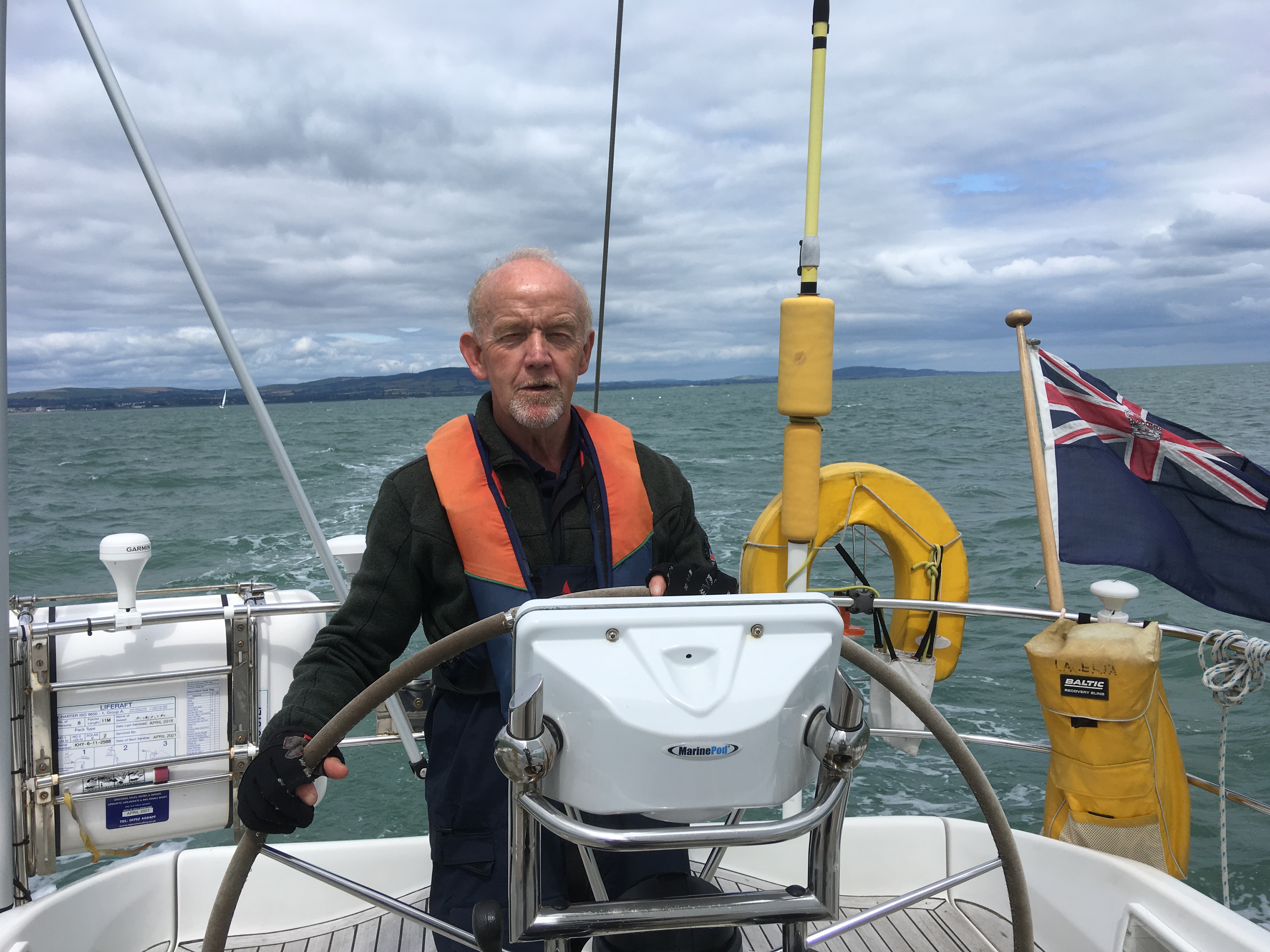
The seas at this stage were relatively smooth and the sun was shining although it still felt cold. In the evening the wind backed to the south west, which was ok at first as we could still hold our course. Fortified by a Debbie’s sausage and bean casserole we were ok although the thought of a 100 mile beat was daunting, not that we had much option other than bailing out to Milford Haven, which would have added 2 or 3 days to our passage as the wind was due to go to the south.
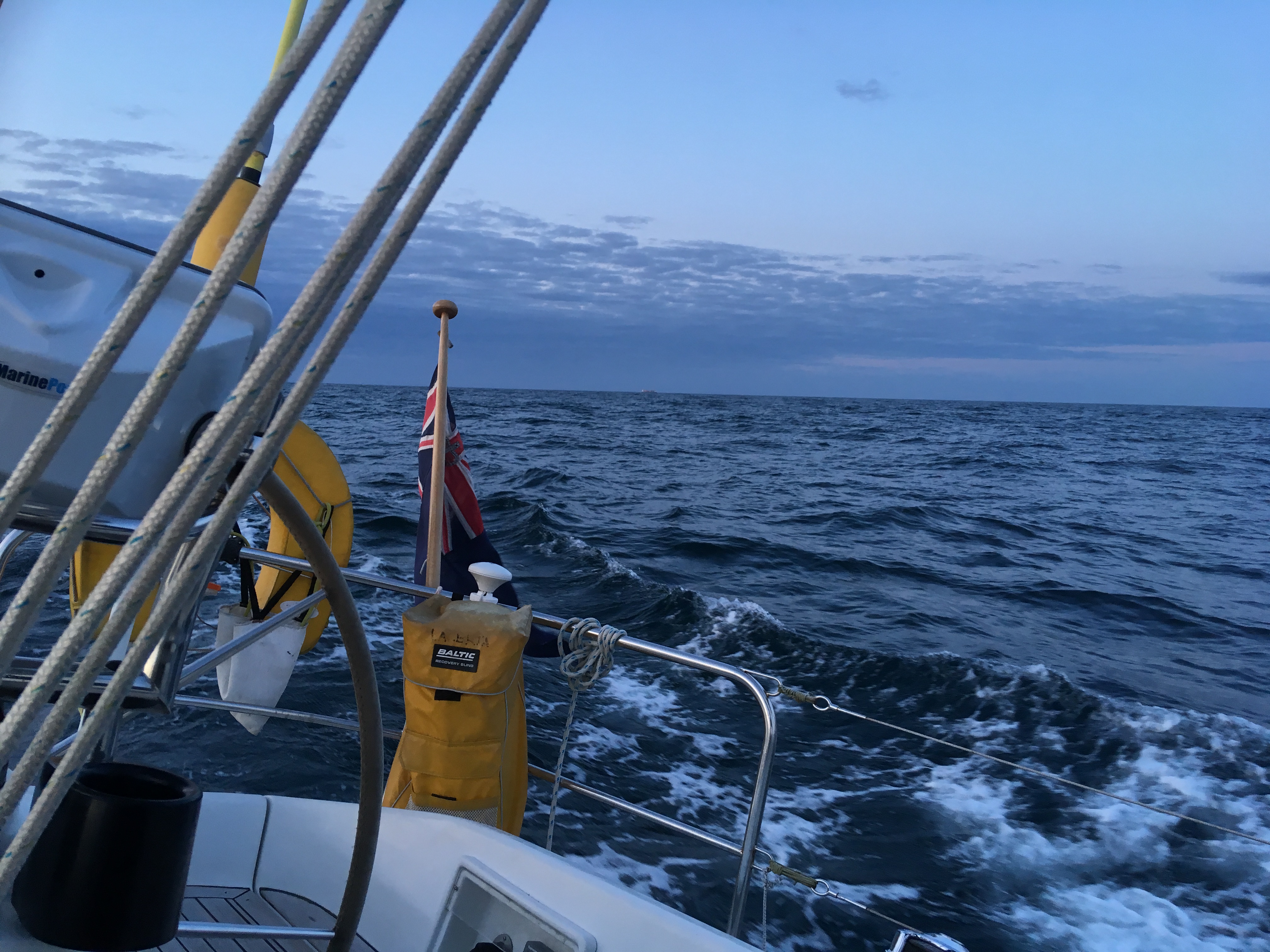
As the wind and sea increased things were more uncomfortable. We put a reef in the main and had various goes at hand steering and motor sailing to keep our heading. The auto helm was more consistent than we were and the wind generator was keeping the battery topped up. In the early hours of the morning the wind backed further so we could no longer make Lands End and increased until we had 2 reefs in the main and a roll in the genoa. We were now heading towards Padstow, which would have been an option but at this stage we wanted to press on to Lands End.
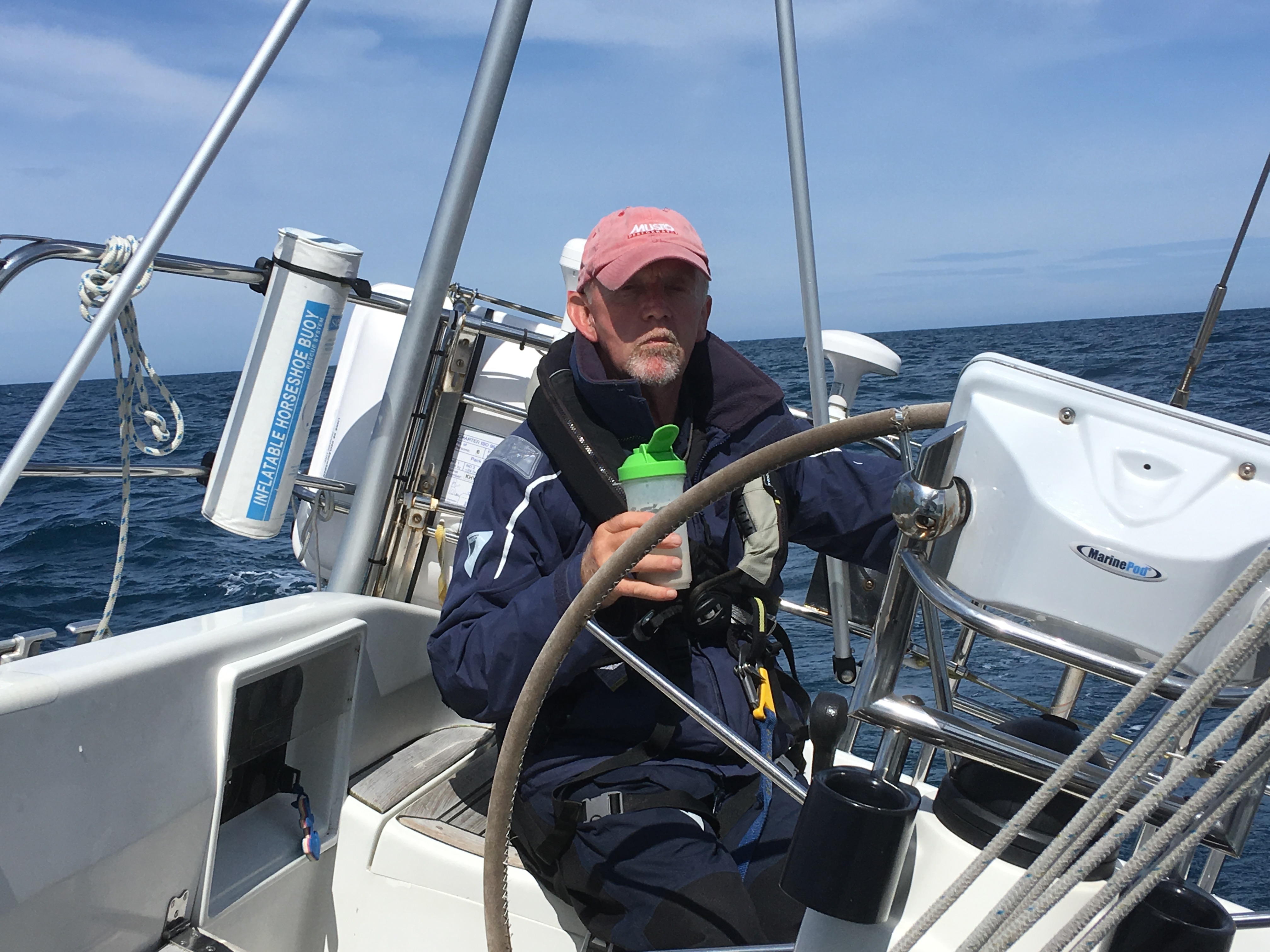
At midday on Sunday we tacked to port to gain some westing and held that course for 3 hours before tacking back to starboard with the wind still consistently blowing 20-23 knots. We were sustained by protein shakes and previously made sandwiches as it was far too uncomfortable to prepare any food.
At this stage we were beginning to doubt whether we would make Lands End that night. We were now heading towards St Ives. We’d now left it too late to bear off for Padstow and make it in time to get into the harbour. There was an anchorage shown at the western end of St Ives Bay but it didn’t look very sheltered. Our only other option was Reeds showed a passage close inshore from St Ives to Lands End which had a favourable current. “ keeping as close inshore as prudent, moving offshore to clear rocks and going inside the Longships”.
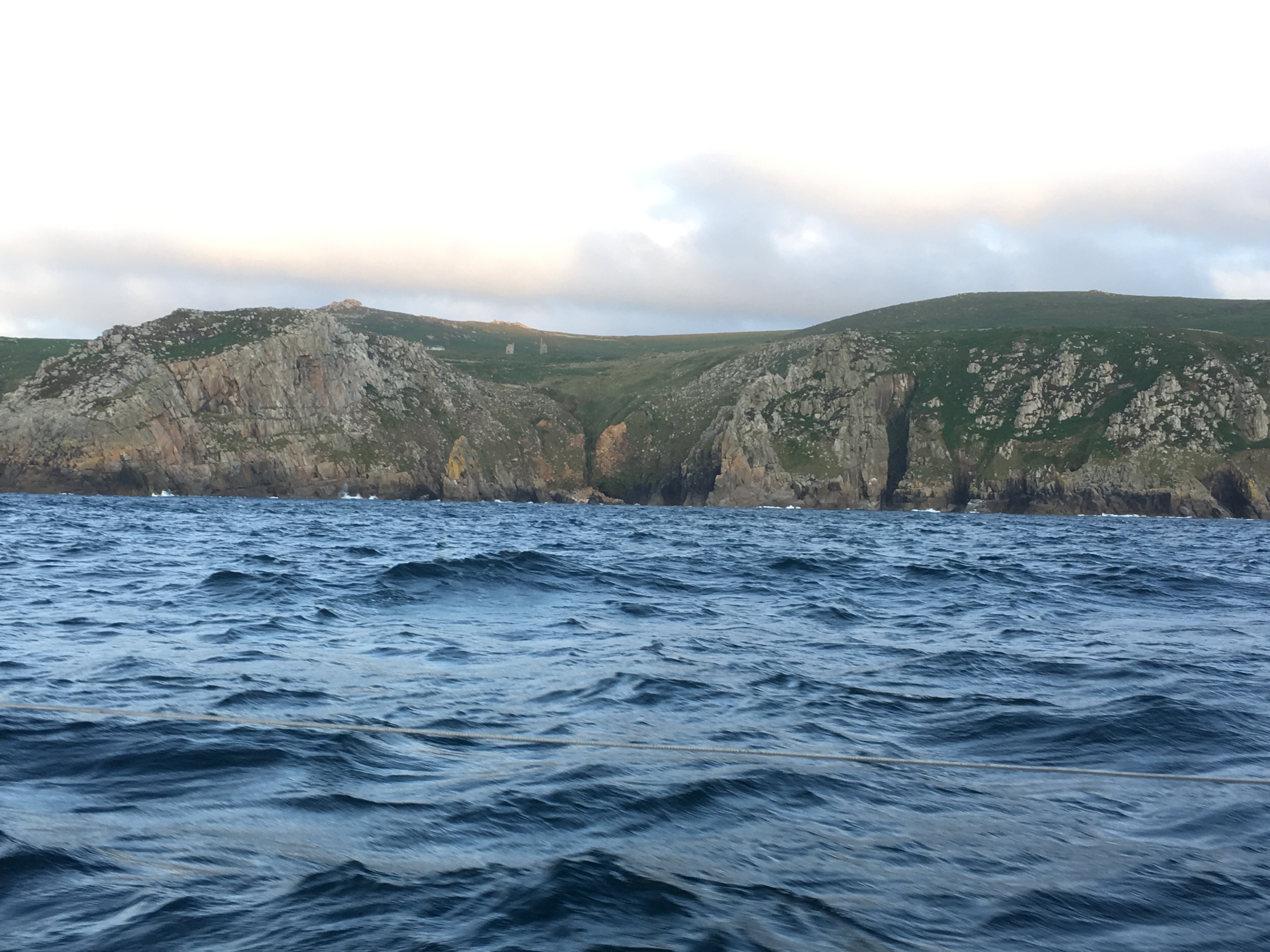
We opted to try this, which would mean motoring to keep close inshore as squalls off the cliffs would make sailing difficult, although we kept the mainsail up with the two reefs. Debbie was flat out after 3 hours at the helm so David was on deck watching for fishing floats and following the coastline round so there were no log entries for this bit.
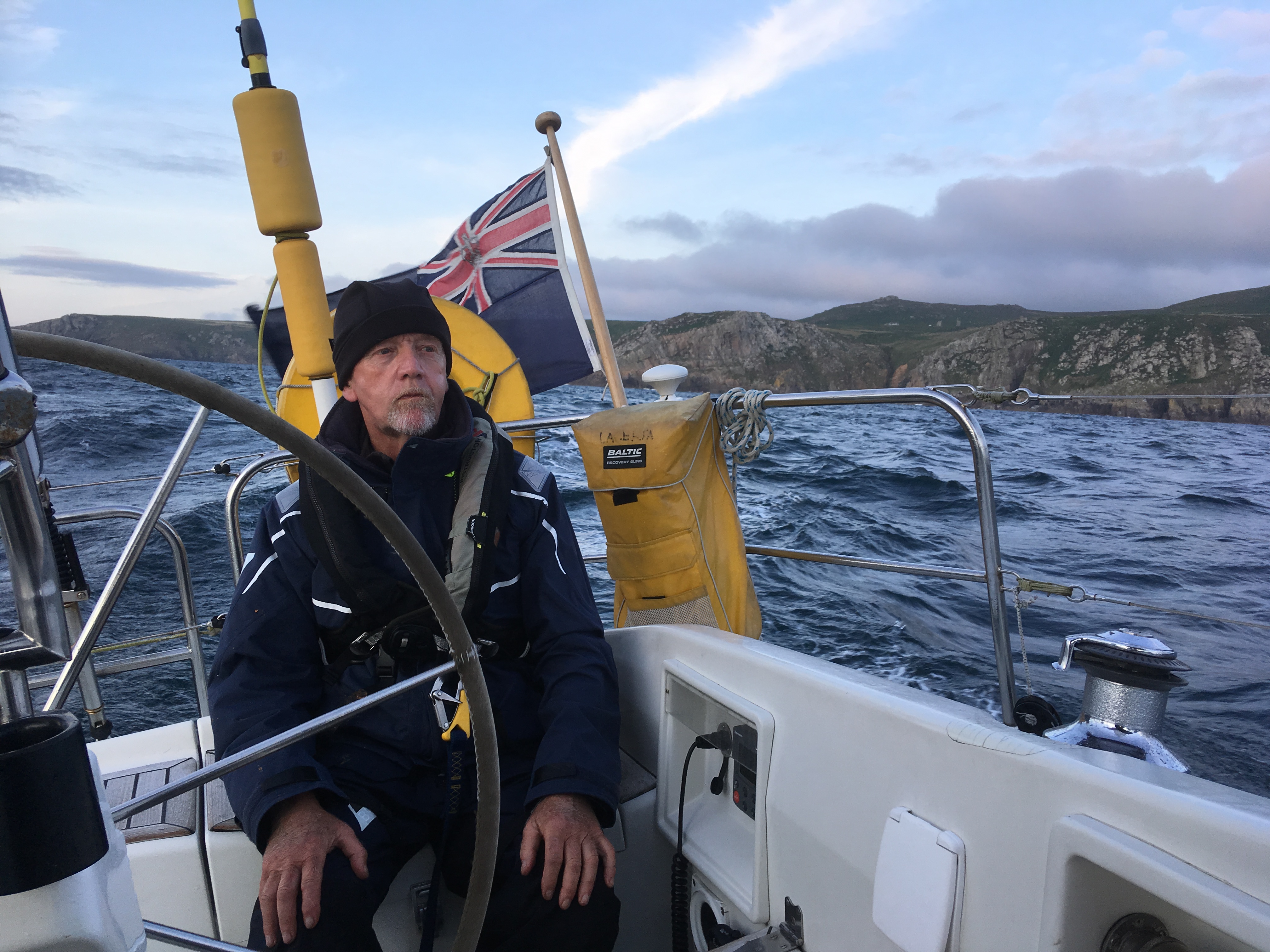
We managed dinner, another helping of sausage casserole, although David lost some of his as a squall blew a mouthful off the spoon and coated his life jacket and coat! The strategy worked as we had about a knot of favourable current, although as we approached Cape Cornwall and went inshore of the Longships it got quite rough and very dark.
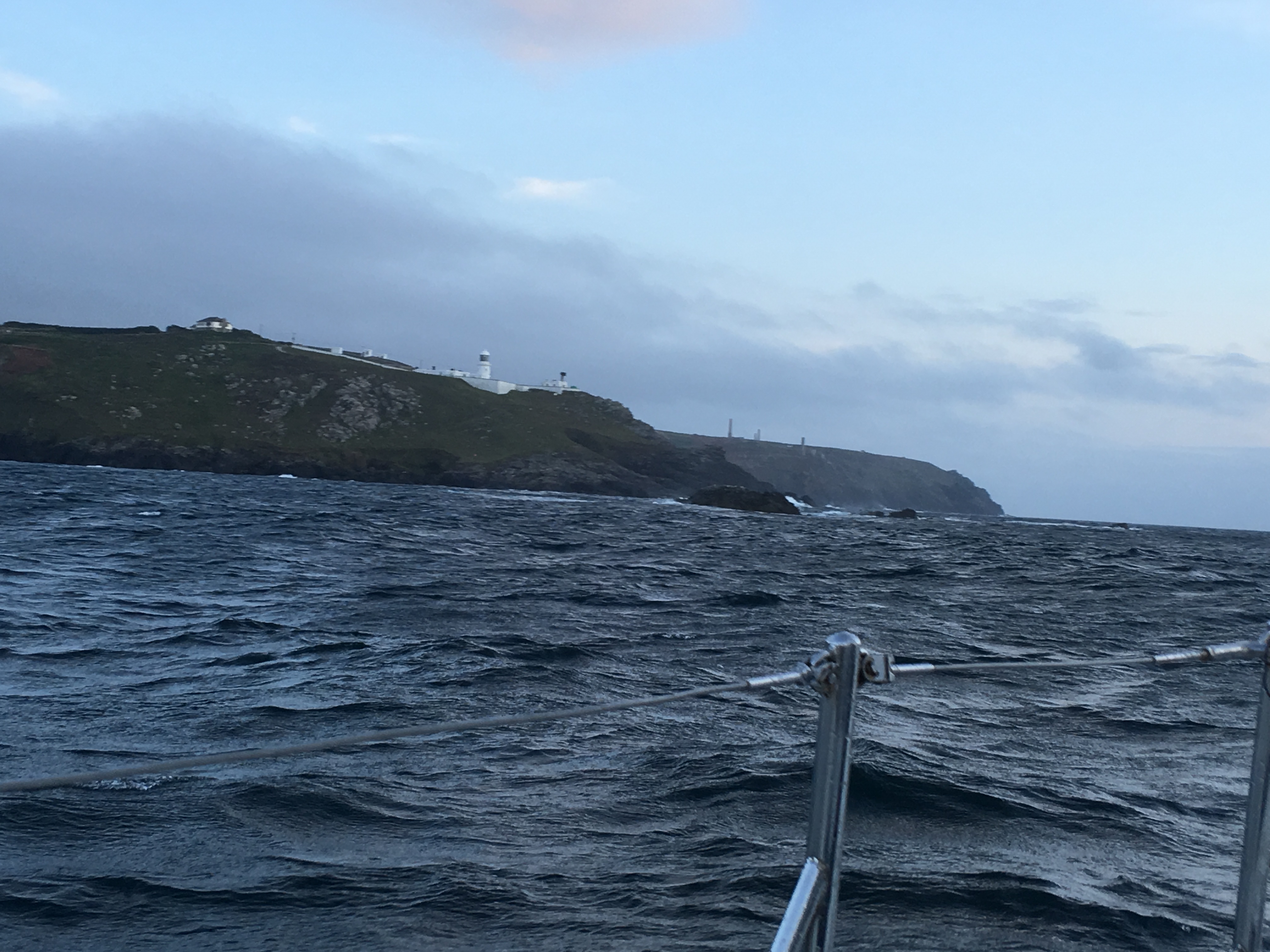
We were relying on the chart plotter to confirm we were on track. South of Lands End it was still very rough as we tried to find the Runnel Stone South cardinal mark when we could bear off and sail again.
We were both pretty tired at this stage, just gone midnight, and slowly motor sailed towards Newlyn where we eventually anchored off the harbour and hit the sack at 0130. A long 187 mile sail!
Next morning we didn’t wake until 0930 but wanted to make Falmouth. To stand any chance of getting around the Lizard we needed to leave straight away, abandoning our usual wake up and breakfast routine. We upped anchor and motored towards Lands End, touch and go whether we would get there before the end of slack water.
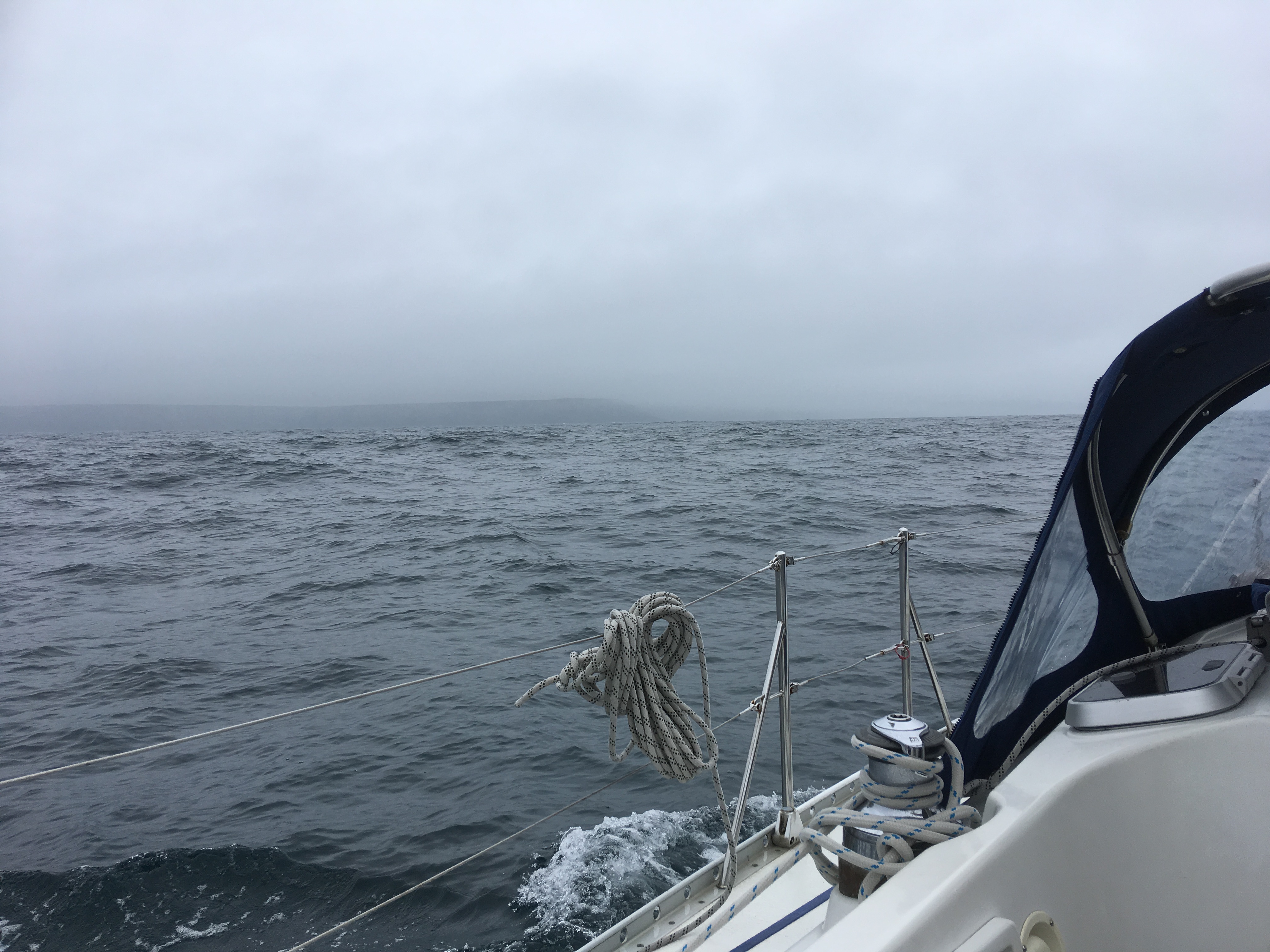
In the end we missed it and had an hour with the tide against us. Just east of the Lizard our inward track crossed our outward track.
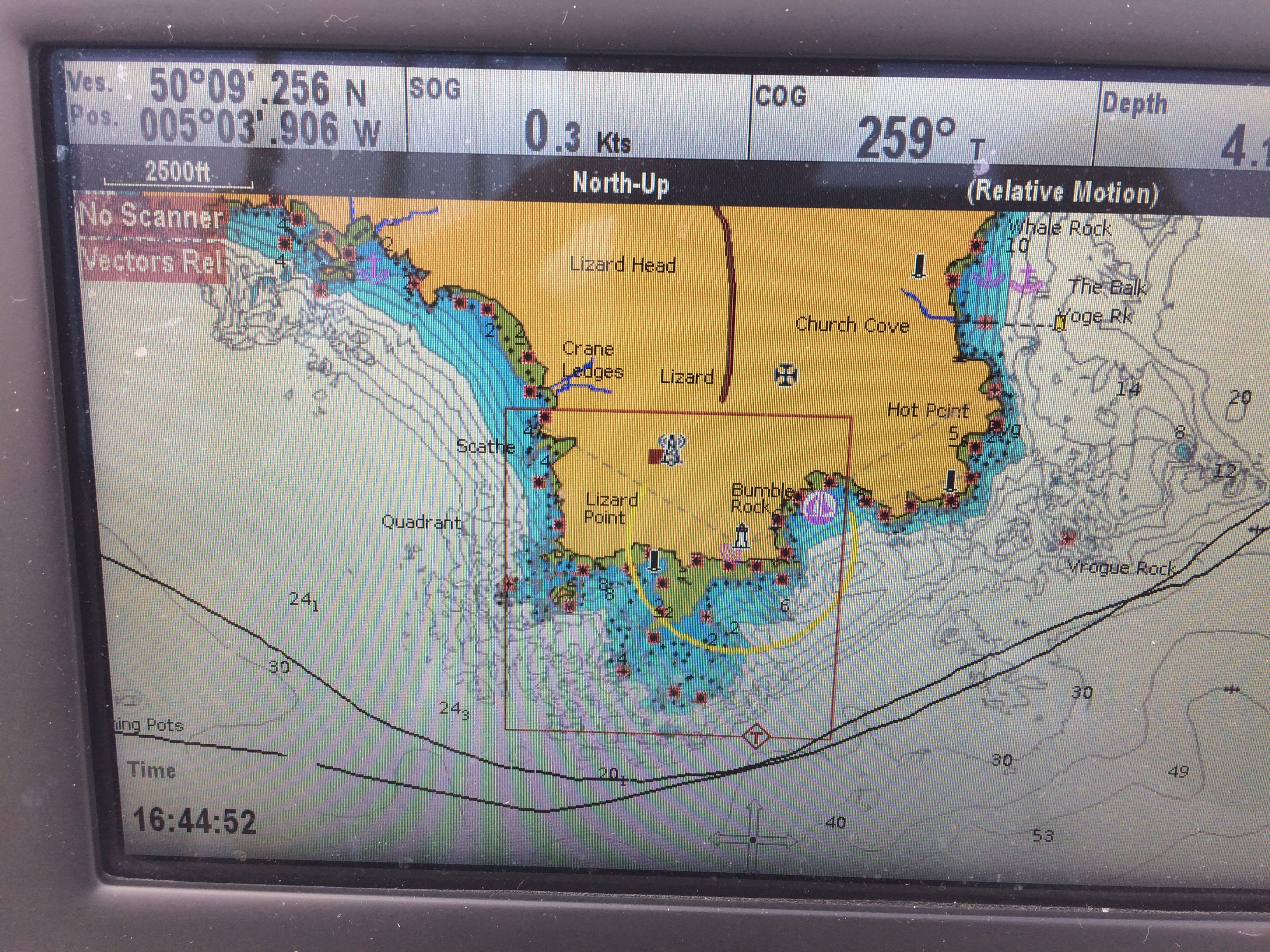
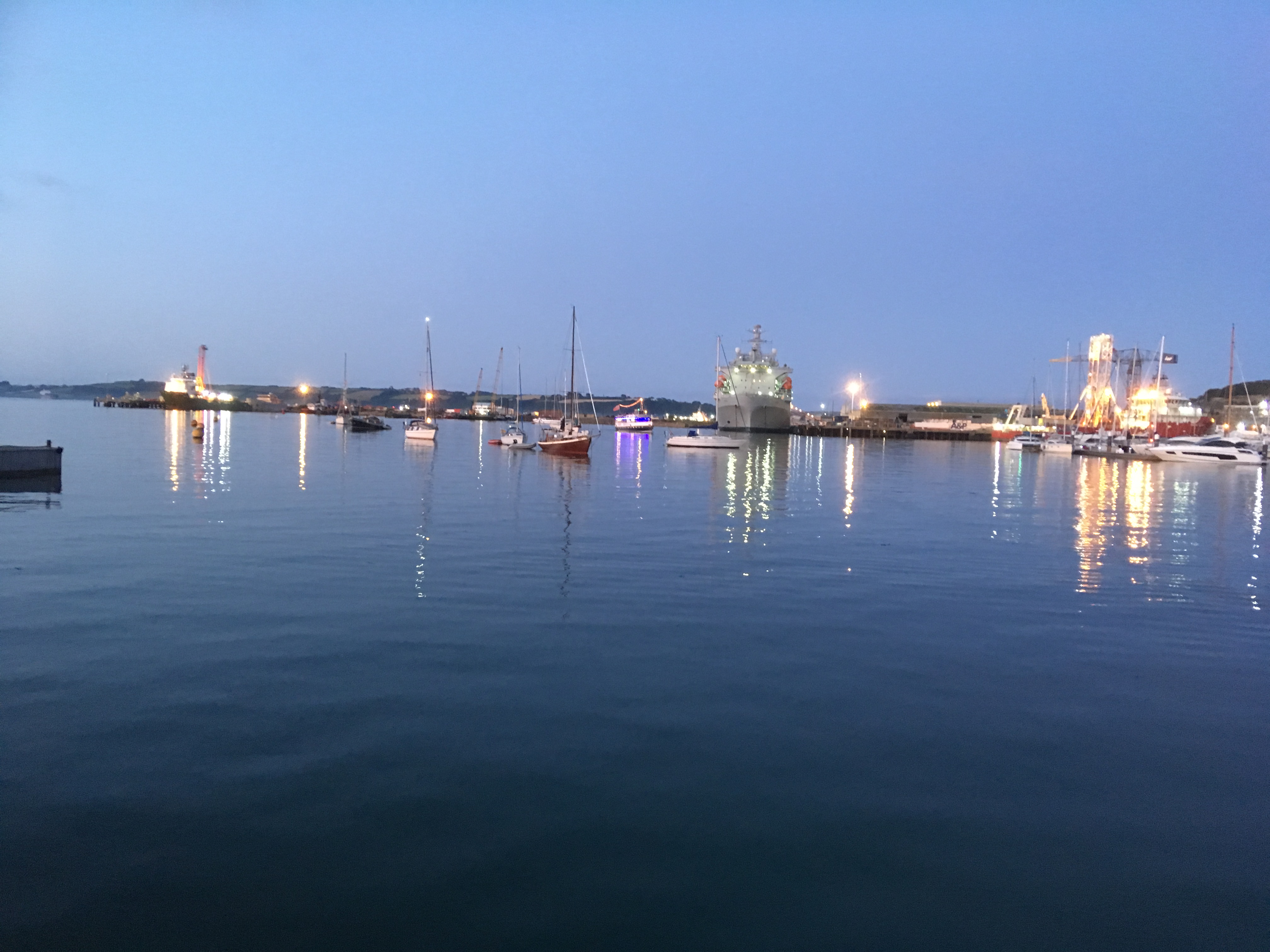
From here on we were retracing our steps. We made Falmouth in bright sunshine and no wind, filled up with diesel and were moored at the Yacht Haven by 1730, ready to sort the washing out!
 Sailing Lacerta